
Brush fencing is valued for its natural appearance, privacy and ability to blend comfortably into Australian gardens. A well-built brush fence can remain an attractive part of a property for years, but like any outdoor structure, it is constantly exposed to wind, rain, sunlight, soil moisture and general wear.
Damage does not always mean the entire fence needs to be replaced. Many problems can be corrected when they are identified early. Knowing what to look for can help homeowners decide whether a minor repair, structural adjustment or more extensive restoration is needed.
Thinning Brush and Visible Gaps
One of the easiest problems to notice is thinning. Over time, individual pieces of brush may loosen, settle or deteriorate. Areas that were once dense can begin to look patchy, allowing light through the fence and reducing privacy.
Re-packing is often an effective solution. Fresh brush material can be worked into the affected area to restore density while retaining as much of the original fence as possible. Careful matching is important because an incorrectly packed section can stand out against the existing brushwood.
Leaning or Unstable Fence Sections
A brush fence should remain upright and firmly supported. If part of it begins leaning, the problem may be connected to posts, foundations, internal wires or movement in the surrounding ground.
Simply pushing the section back into position is unlikely to provide a lasting solution. The cause needs to be identified first. Damaged posts may require replacement, while loose structural components may need adjustment before the brush itself is restored.
This is one situation where professional brush fencing repairs can help prevent a relatively small structural problem from becoming a much larger one.
Loose or Sagging Wires
Wire plays an important role in holding brushwood firmly in place. As a fence ages, wire can lose tension, become damaged or begin pulling away from its original position. The top of the fence may then sag, while brush material can start moving or separating.
Re-tensioning may be enough when the wire remains in reasonable condition. Where corrosion or physical damage has occurred, replacing sections of wire may provide a more reliable repair. The brush should then be checked and re-packed where required.
Weather and Storm Damage
Strong winds can place considerable pressure on outdoor fencing, particularly if posts or other structural elements have already weakened. Falling branches and flying debris may also damage individual areas during severe weather.
The extent of storm damage should be inspected before deciding what to replace. Sometimes only one section has moved while the remainder of the fence is still sound. Repairing that particular area may be more practical than removing an otherwise serviceable fence.
Brush Fence provides repair services across Sydney and the Central Coast, including work associated with storm damage, shifted panels and leaning sections.
Damage Around the Fence Base
The lower section of a fence deserves particular attention because it can be affected by moisture, soil contact and nearby vegetation. Brush that remains damp for extended periods may deteriorate faster than material higher up.
Keeping garden beds, irrigation systems and heavy vegetation appropriately managed around the fence can reduce unnecessary moisture exposure. When deterioration has already occurred, damaged brush may need to be removed and replaced while the supporting structure is checked.
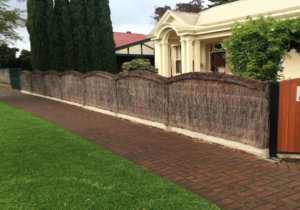
Problems With the Fence Capping
The top of a brush fence is particularly exposed to weather. Capping helps protect the upper surface while also creating a neat finished appearance. With age, however, the top may become uneven, damaged or loose.
Depending on the condition, the solution might involve restoring the existing top, adding fresh material or replacing damaged capping. Addressing the problem early can also help protect the brush underneath from further exposure.
Accidental Impact Damage
Vehicles, landscaping equipment, falling trees and other unexpected impacts can damage one part of a brush fence without affecting the entire boundary. Posts may bend or crack, and the brush can be pushed out of position.
A proper assessment helps determine how far the damage extends. A damaged post may need replacement before the surrounding brush is rebuilt. Matching the density, height and natural appearance of the existing section can make the finished repair much less noticeable.
Repair or replace?
The decision depends on the overall condition of the fence rather than its age alone. A fence with several healthy sections and one localised problem may be a good candidate for repair. Widespread deterioration across posts, wires and brush may make larger reconstruction more practical.
It is worth looking at structural stability, brush density, existing capping and the number of damaged areas together. Repair decisions based only on appearance can overlook problems hidden inside the fence.
Regular Checks Can Reduce Larger Repairs
Homeowners do not need to inspect every piece of brush individually. A brief visual check occasionally can reveal leaning areas, loose tops, obvious gaps or movement before the problem becomes severe.
Vegetation should also be kept under reasonable control, and unusual changes after storms deserve attention. Early maintenance generally gives homeowners more repair options than waiting until an entire section becomes unstable.
Conclusion
Brush fencing is designed to provide a dense, natural boundary, but exposure to weather and everyday wear will eventually leave signs of ageing. Thinning brush, loose wire, damaged capping and unstable posts are common problems, yet many can be addressed without automatically replacing the whole fence.
The most suitable repair depends on what is actually causing the damage. Careful assessment and targeted restoration can preserve the fence’s original character while improving its strength, privacy and appearance for the years ahead.